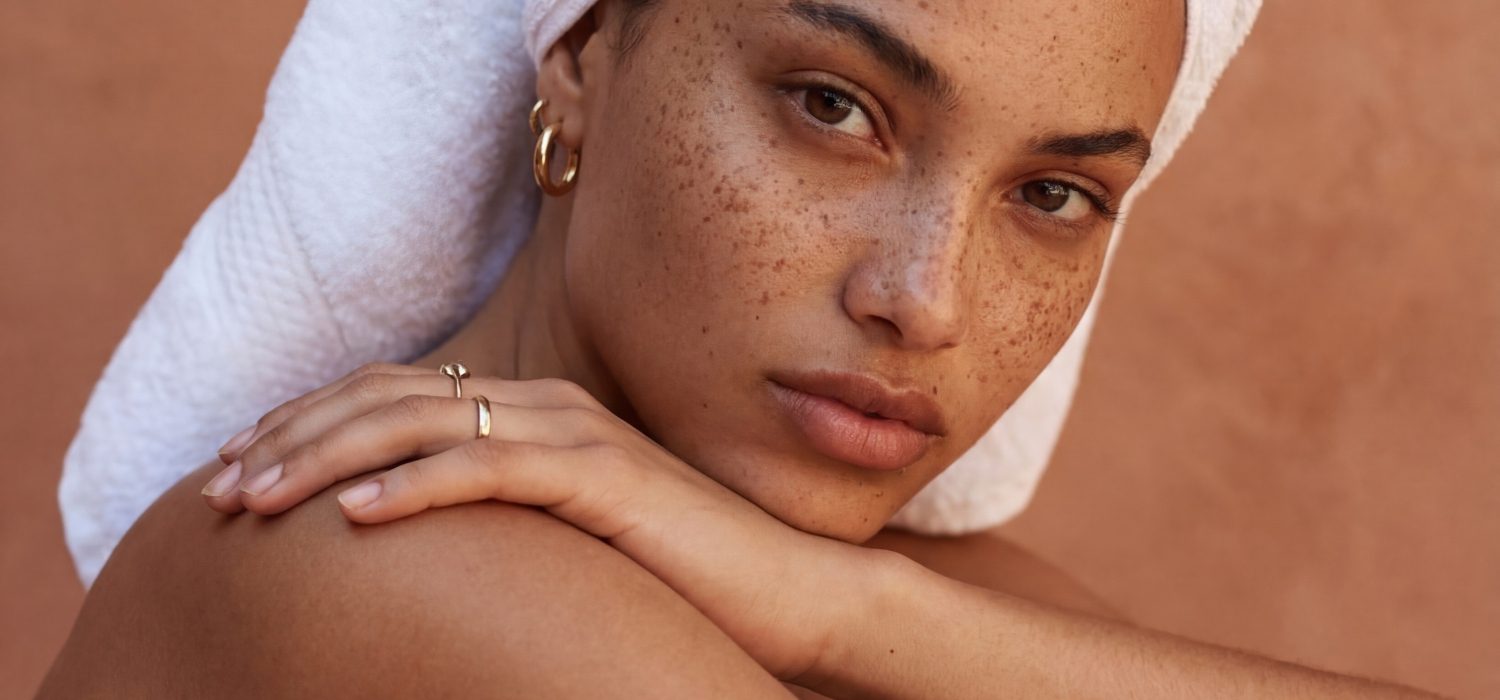
Noticing changes on your skin is often enough to send you straight into a Google search spiral. I get it, I’ve been there. Is it a freckle? A mole? Has it always been there, and when should you worry?
The good news is that most freckles and moles are harmless. But understanding the difference between mole and freckle can help you keep an eye on your skin confidently, and know when it’s time to get something checked.
To help break it down, we picked up with Dr Björn Thomas a Harley Street dermatologist and founder of the Thomas Clinic, for a mini-overview on:
- Moles vs freckles
- Key signs and changes that warrant a second look
- How to be aware of your skin cancer risk
- Where to go to get help
Good to know – Summer is on the way, and May is Skin Cancer and Melanoma Awareness Month, making it a timely moment to get clearer on what you’re seeing on your skin.
What is the difference between moles vs freckles?
When it comes to moles vs freckles, both involve pigment in the skin, but they develop differently.
“Moles and freckles are both pigmented lesions, but they are quite different things,” explains Dr Thomas. “Moles (melanocytic naevi) are nests of melanocytes, the pigment-producing cells in the skin, clustered within the skin. Freckles (ephelides) occur where individual melanocytes simply produce more melanin (pigment) in response to sun exposure, rather than forming clusters.”
In simpler terms, freckles tend to appear because your skin is reacting to UV exposure, while moles are actual clusters of pigment cells.
Freckles are also usually dynamic. You might notice them darken during summer and fade in winter, especially if you have fair skin. Moles tend to stay more consistent over time.
Dr Thomas also points out that many people confuse freckles with solar lentigines, often referred to as age spots or sun spots.
“It is worth separating freckles from solar lentigines, which people often confuse,” he says. “Freckles are dynamic: they darken in summer and fade over winter. Solar lentigines are fixed and permanent, representing a true increase in melanocyte density. I would describe them as a marker of cumulative sun exposure.”
How to know if a mole or freckle is cancerous, or abnormal
One of the most common searches around skin health is how to know if a mole or freckle is cancerous.
No online checklist can replace a professional assessment here, but there are a few recognised warning signs dermatologists use.
Dr Thomas recommends starting with the ABCDE rule:
- A: Asymmetry – one half does not match the other
- B: Border – irregular, ragged or blurred edges
- C: Colour – variation within a single lesion, or two or more colours
- D: Diameter – historically, lesions above 6mm warranted attention, although diameter alone is now considered less reliable
- E: Evolution – changes over time are now considered one of the most important warning signs
That final point matters a lot. A mole that changes shape, colour, size, texture or sensation deserves attention, even if it doesn’t tick every other box.
Dr Thomas also highlights the “ugly duckling” principle.
“Any lesion that looks out of place compared to your other moles deserves attention,” he explains.
Beyond the areas on our skin that are typically the most exposed to the sun, it is also important to remember that melanoma can appear almost anywhere on the body. Dr Thomas notes that melanomas can develop on the scalp, palms, soles, nails and even the whites of the eyes.
What mistakes do people make when looking for abnormalities?
According to Dr Thomas, many people put too much pressure on themselves to become experts overnight.
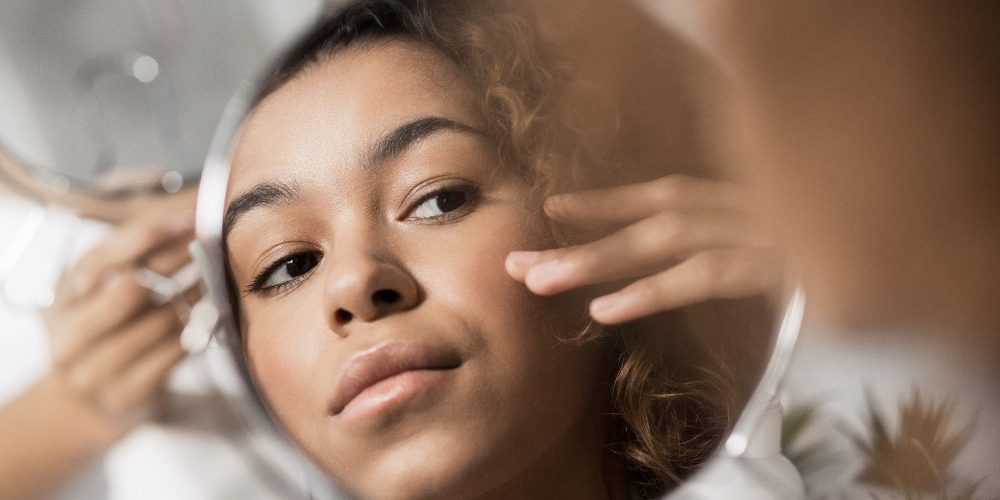
“I think it is unfair to put too much diagnostic responsibility on patients,” he says. “The key habit is regular self-examination, every four to twelve months depending on your risk level, and seeking professional review if something concerns you.”
He explains: “One pitfall I see is false reassurance after a clear mole mapping scan or screening check,” says Dr Thomas. “Things can change between assessments, so continuing to monitor yourself in the intervals is important.”
If you’ve had mole mapping or skin imaging done before, keeping copies of your baseline images can be useful, as comparing photos over time makes it easier to spot subtle changes.
Are some of us more at risk than others?
Yes, and risk levels can vary quite a bit from person to person.
“We are increasingly moving towards stratified risk assessment rather than treating everyone the same,” explains Dr Thomas.
Some of the biggest risk factors include:
- Fair skin and red hair – Red hair and fair skin are linked to pheomelanin, which carries a higher UV-damage risk than eumelanin, found more commonly in darker hair and skin types.
- Skin that burns easily – If you tend to burn rather than tan, minimising UV exposure is especially important.
- Family history – Having a first-degree relative with melanoma, basal cell carcinoma or squamous cell carcinoma increases your risk.
- Organ transplant recipients – People taking long-term immunosuppressive medication are considered a particularly high-risk group and are often monitored more closely.
Dr Thomas also stresses that although overall skin cancer risk is lower in South Asian and Black African patients, certain areas still require attention.
“Acral sites, specifically the palms, soles and nails, remain vulnerable to acral lentiginous melanoma and should not be overlooked,” he says.
Where to get help, if you’re worried
If you’re concerned about a mole, freckle or any changing lesion, booking an appointment with a dermatologist is the best next step.
“If you have any concern about a lesion, see a dermatologist,” says Dr Thomas. “NHS patients can ask their GP to refer via the two-week wait skin cancer pathway.”
He also notes that even private dermatology waiting times can stretch beyond six weeks in some areas, so it’s worth acting sooner rather than later if something changes.
Understanding the basics of moles vs freckles can make checking your skin feel far less overwhelming. Most marks are harmless, but paying attention to new or evolving lesions is an important habit for long-term skin health.
Liked this feature? Bookmark this one to read next: Our 7 fave kids roll on sunscreens this summer (& yes, adults can use them too)
The post Moles vs freckles – <i>here’s the difference</i> (& how to spot when something’s <i>not</i> right) appeared first on The Ribbon Box.
PakarPBN
A Private Blog Network (PBN) is a collection of websites that are controlled by a single individual or organization and used primarily to build backlinks to a “money site” in order to influence its ranking in search engines such as Google. The core idea behind a PBN is based on the importance of backlinks in Google’s ranking algorithm. Since Google views backlinks as signals of authority and trust, some website owners attempt to artificially create these signals through a controlled network of sites.
In a typical PBN setup, the owner acquires expired or aged domains that already have existing authority, backlinks, and history. These domains are rebuilt with new content and hosted separately, often using different IP addresses, hosting providers, themes, and ownership details to make them appear unrelated. Within the content published on these sites, links are strategically placed that point to the main website the owner wants to rank higher. By doing this, the owner attempts to pass link equity (also known as “link juice”) from the PBN sites to the target website.
The purpose of a PBN is to give the impression that the target website is naturally earning links from multiple independent sources. If done effectively, this can temporarily improve keyword rankings, increase organic visibility, and drive more traffic from search results.